The Showcase
DAAPX celebrates alumni innovation through a curated series of TED-style presentations spanning disciplines, careers, and creative practices. This program brings together artists and designers working across environments, storytelling, accessibility, branding, and public experience to explore how design shapes everyday life.
The Topic: Experiential Design
Experiential design transforms ideas into something you can interact with — spaces you move through, stories you participate in, and environments designed with people in mind.
During the 2026 showcase, DAAP alumni explored how thoughtful design influences human experience, from sensory-aware environments to public art, brand storytelling, and inclusive fashion. Together, their work shows how design shapes the way we feel, navigate, and connect with the world around us.
In Partnership with the DAAP Alumni Council
Serving as the 2026 Presenter Selection Committee, the DAAP Alumni Council reviewed proposals, selected this year’s presenters, and hosted one-on-one check-ins to support speaker preparation ahead of the showcase. The Council’s engagement strengthens the connection between alumni and the college.
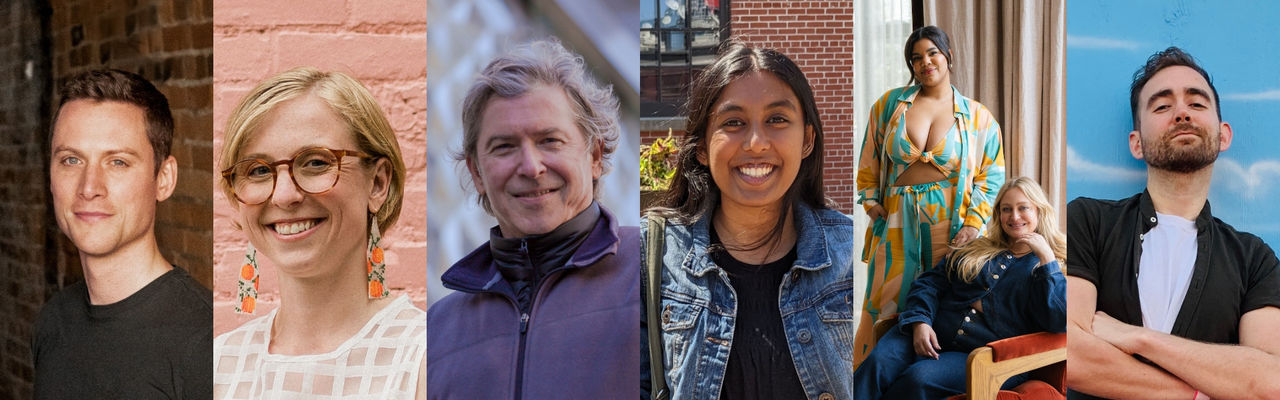
2026 Presenters
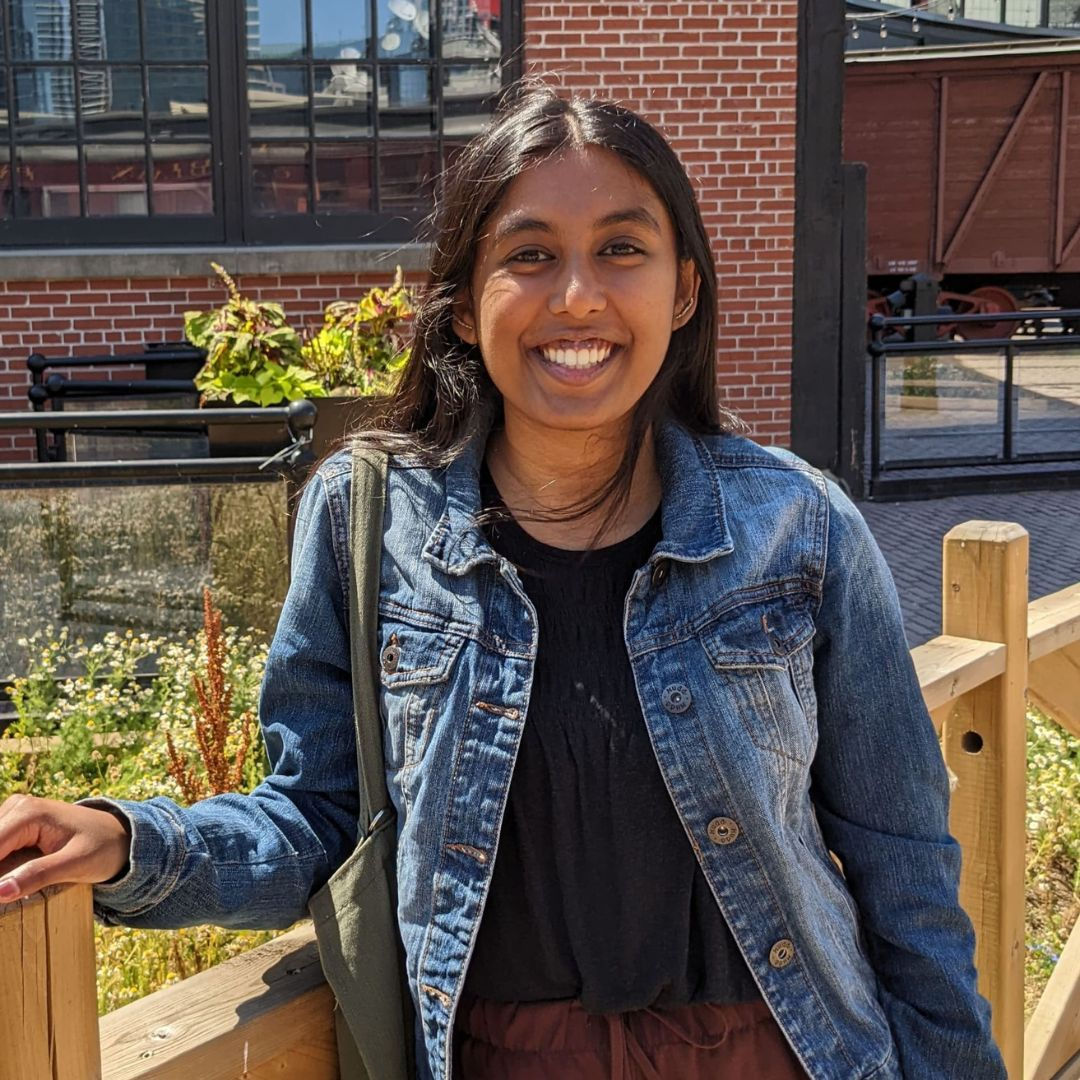
Designing for Autism | How can a holistic, autistic-friendly design approach be adopted in the renovation of an existing public school building? Using Magda Mostafa’s ASPECTSS Design Index — Acoustics, Spatial Sequencing, Escape Spaces, Compartmentalization, Transitions, Sensory Zoning, and Safety — this presentation examines the redesign of a K–6 elementary school in Boston. Focusing on entrances, corridors, classrooms, outdoor play, and sensory rooms, it demonstrates how practical design adjustments can support sensory, social and cognitive needs. Rather than requiring radical change, autistic-friendly design reframes existing standards in ways that benefit all students and educators.
Sneha Ameya earned her BS in Architecture from DAAP and a Master of Architecture from the Boston Architectural College. Focused on K–12 education design, her thesis research explores human-centered environments that support the sensory, social and cognitive needs of neurodivergent students. Through her experience working on Boston and New York based, public-fund projects in the K-12 and Higher Educations sectors, she developed a strong interest in the relationship between design intent and built reality. She is particularly drawn to community-driven, sustainable projects with elements of adaptive reuse and renovations. Outside of architecture, she enjoys film culture, crocheting, baking, reading, and long city walks.

Typology, Frame, Muse: A Framework for Experience |Experiential environments don’t happen by accident — they are the result of clear intent, shared language, and disciplined creative frameworks. Typology, Frame, Muse (TFM), a concept-generating exercise, brings core principles of hospitality design to other areas of practice. TFM is a simple but powerful tool that describes a project through three lenses: Typology (the “what”), Frame (the “where”), and Muse (the unexpected inspiration that gives a space its identity). Together, these components allow designers to uncover an authentic conceptual “truth” for a project — one that is grounded in use, informed by context, and elevated through meaningful inspiration. This presentation explores how the TFM exercise can be applied early in the design process to build layered, intentional experiences. You’ll see how this replicable approach transforms abstract ideas into cohesive, experiential environments that resonate with both clients and guests. By prioritizing process over product, designers can create spaces that are intentional, memorable, and deeply connected to their purpose.
Alex Gormley is an architect and partner at INDIO, where his work focuses on the design of experiential environments rooted in brand identity, hospitality principles, and thoughtful execution. Over the past four years, Alex has helped grow INDIO from a young studio into an award-winning practice with completed projects across Ohio, Kentucky, California and Georgia. His recent work includes the new Salazar restaurant, the renovation and repositioning of the Mercantile Center, and multiple boutique hospitality and mixed-use concepts that blend narrative-driven design with operational clarity. Alex’s approach emphasizes process as much as product, developing frameworks that translate conceptual intent into built work that resonates with users and communities. Alex holds a Master of Architecture from the University of Cincinnati’s DAAP School of Architecture & Interior Design, where he was a recipient of the Lyceum Fellowship and AIA School Medal. He is a licensed architect in four states and previously practiced with firms in Boston, Chicago, Baltimore and Cincinnati.

Prioritizing People: A Planner’s Perspective on Streetscapes | Everyone interacts with streetscapes daily — whether major roadways, neighborhood business districts, or small residential streets — and the design of these streetscapes impacts their lives. They may be places that a person wants to avoid or simply pass through, or that they like and where they stop and hang out. Often, the places where people like to spend time have streetscapes designed at the human scale — for people, not for vehicles. At the micro level, human-scaled streetscapes are safer, healthier, and more welcoming to the individual. At the macro level, this appeal supports the long-term stability and success of the communities these streetscapes exist in. This presentation will discuss these street typologies and why city streetscapes should be human-scaled and pedestrian-focused, reversing decades of favoring vehicle traffic.
Anna Barchick-Suter is the Development Director for NEST, Cincinnati’s Northside community development nonprofit, where she oversees the organization’s real estate development projects. Prior to joining NEST, Anna spent seven years on 3CDC’s development team, focused on projects in Over-theRhine and downtown Cincinnati. Across both organizations, Anna has led real estate initiatives designed to address community needs. Her portfolio includes market-rate and affordable residential projects, commercial development, and civic improvements such as public art, streetscapes and pedestrian safety enhancements, park renovations, and a recreation center. Ongoing community engagement and outreach have been integral to this work, ensuring projects reflect the voices and priorities of the neighborhoods they serve. Anna earned her Bachelor of Urban Planning from the University of Cincinnati and began her career in her hometown of Toledo, working with two community development nonprofits.

The Billion-Dollar Blind Spot: Why Size Inclusivity Is Fashion's Next Gold Rush | The fashion and beauty industries have long treated size inclusivity as a charitable gesture — a PR move or ethical obligation. But the data tells a different story: it's one of the most overlooked profit opportunities in retail history. With 67% of American women wearing size 14 or above, and the plus-size market valued at over $24 billion, brands that expand their size ranges aren't just doing good — they're capturing massive, underserved demand. Companies like Savage X Fenty and Universal Standard have proven that inclusive sizing drives both cultural impact and bottom-line results, with customer loyalty rates that far exceed industry averages. This presentation uncovers the surprising economics of exclusion — why brands leave billions on the table, how vanity sizing and outdated manufacturing models perpetuate the problem, and what forwardthinking companies are doing differently. From algorithmic fit technology to supply chain innovation, size inclusivity is not simply about adding more sizes; it is about reimagining the entire business model. The future of fashion is not just more inclusive — it is more profitable. Size inclusivity is not a cost center; it's a competitive advantage waiting to be claimed. The brands that recognize this first will define the next decade of retail.
Beth Hitchcock is the founder of Fluffi, a body diversity brand consultancy helping companies build profitable, size-inclusive strategies. She began her career at the University of Cincinnati’s DAAP School of Design where she studied end-to-end design before earning a Bachelor of Science in Fashion Design. Beth went on to work in publishing at Condé Nast in New York City, where her love of photo shoots led her to become a sought-after stylist and plus-size model. Through her work on high-level campaigns across multiple roles, Beth developed a unique, insider perspective; she now advises industry leaders on how to authentically connect with the plus-size consumer.
Taylor Long is a designer, model and entrepreneur redefining what inclusivity looks like in fashion. As a Fashion Design student at DAAP, Taylor was simultaneously building her career as a plus-size model, working with brands like Target, Soma and Beyond Yoga, and modeling internationally in Australia. Through those experiences, she saw firsthand how rarely fashion education — and the industry itself — truly designs for the average American woman, who wears a size 18–20. For her senior capstone, Taylor created the swimwear she longed to see: luxe, sustainable, timeless pieces intentionally designed for bodies of all sizes. That collection became Nomads Swimwear, the brand she launched immediately after graduation in 2020. Today, Nomads has been featured in Forbes and Sports Illustrated Swimsuit, carried by retailers including Anthropologie and Shopbop, and recognized by leading accelerator programs. Yet at its core, the brand remains rooted in Taylor’s belief that inclusivity isn’t a trend, it’s a responsibility.
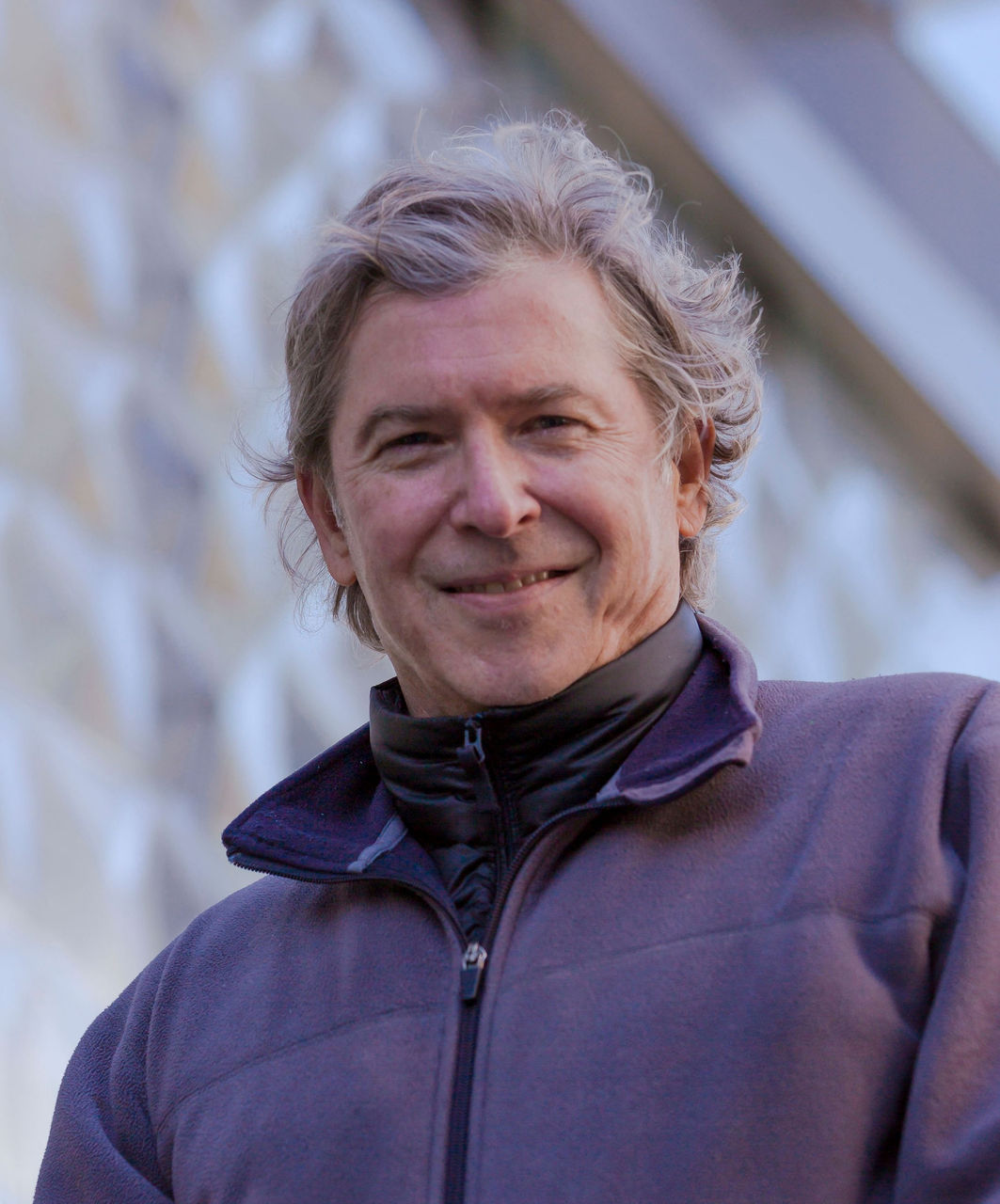
An Acorn Cap Inspires Architecturally Integrated Public Art | “Retu(r)ned Oak” is a site-responsive public art installation that reinterprets nature’s beauty through the timeless language of mathematics. Inspired by the Coastal Live Oak trees that gave Oakland its name, the work was commissioned as part of the 2017 restoration of the historic Key System Building and its connection to a new high-rise at 1100 Broadway. When architects designated a band of north- and westfacing glass above the sidewalk as the project site, the central question emerged: how can clear glass animate a building? The answer combined the reflective properties of glass with the geometric logic of the oak’s acorn cap. By analyzing the acorn’s proportional system and integrating it with the building’s structural grid, Daniel developed a parametrically derived three-dimensional tessellated pattern — a contemporary artwork rooted in ecological history and architectural precision. This presentation explores the conceptual and technical journey behind “Retu(r)ned Oak”, revealing how art and architecture can merge to create work that is both rigorously constructed and deeply connected to place.
Daniel Winterich was raised in a 110-year-old family business devoted to the liturgical arts, where his training in stained glass began in 1974. His deep attention to craft developed through ecclesiastical projects across the Midwest. While studying at the DAAP School of Architecture and Interior Design, he expanded his training at Oidtmann Glasmalerei in Germany in 1982, apprenticing in glass painting with leading European artists. After earning his degree and becoming a registered architect, Daniel worked with three award-winning architectural firms before establishing Studio Winterich. Today, he creates largescale, site-specific installations that thoughtfully integrate art and architecture.

How to Name a Planet | A project’s name delivers a critical first impression and serves as an invitation to explore something or somewhere new. When crafted with intention, a name becomes the project’s center of gravity, shaping and connecting every detail of its experience, from the language used to welcome its first guests to the mission that compels them to stay. By implementing a thoughtful naming process, we can create more cohesive, immersive and meaningful experiences that feel less like business objectives and more like works of art. This presentation explores naming as a tool for building new, explorable worlds, whether physical or digital, and reveals how a single word can shape the future of a project or an uncharted planet. A name establishes tone, aesthetic and expectation long before its first inhabitants arrive. Through real-world examples of words that became worlds, and those that did not, we will examine what makes a name worthy of reality, worth visiting, and worth writing home about.
For over 15 years, Patrick Yovanov, has helped brands carve out their space in pop culture through a strategic and story-led approach to brand naming, verbal identity, and experience design. Through his practice, Jingleheimer, he's crafted award-winning names from landmark hotels and restaurants to celebrity CPG, spirits, and next-generation snacks.

DAAPX Archive
Explore past DAAPX presentations. Each drop-down menu highlights our alumni presenters and the titles of their talks. Click the button below to watch full recordings and experience their work firsthand.

Lisa Bambach ’12, BSDE
School of Design |
Ecotonal Office: A Shift in Workplace Wellbeing

Jessica Lawless ’10 BSDE
School of Design |
Designing a Redesign: Using Brand and Story to Engage Bus Riders

Erin Smith Glenn, ’09 MFA
School of Art |
HAIRitage | A Cultural Journey & Experience

Nvard Manasyan ’00 MCP
School of Planning |
Shaping Activism Through Urban Spaces

Kashish Kalra, ’23 BSDES
School of Design |
Designing for Human Adaptation: Systems that Shape Behavior & Action

Ben Niebauer ’01 BARC
School of Architecture & Interior Design |
Oh, the Places You'll Design!

Valerie Allen, ’75 BFA and Armin Mersmann | Art Ladders: The Creative Climb Podcast – Empowering Artists Through Conversation

Hal Apple, ’82 BSDE | WOMEN. SERIOUSLY?
Rob Paul Baum, ’71 BSARC | Arts & Crafts Continuum: Emerging Creative Land Use Project
Don Jacobs, ’67 BSARC | Case Study: Winery Tasting Room

Megan Mays, ’08 BSDE | Agile Revolution: Embracing ‘Product Gems’ for Simplicity and Success

Alex Pesta, ’02 BARC | Building a Culture of Experience

Scott Shall, ’98 BSARC | Building at the Edge: Reconstructing Design Practice within Improvised Settlements

Matthew Spoleti, ’23 BSDE | Empathizing with Apathy

Joe Walsh, ’15 BSDE | Drawing Leads the Way












Marie Morgan, A&S '21
Program Director, Alumni Engagement, College-Conservatory of Music & College of Design, Architecture, Art, and Planning